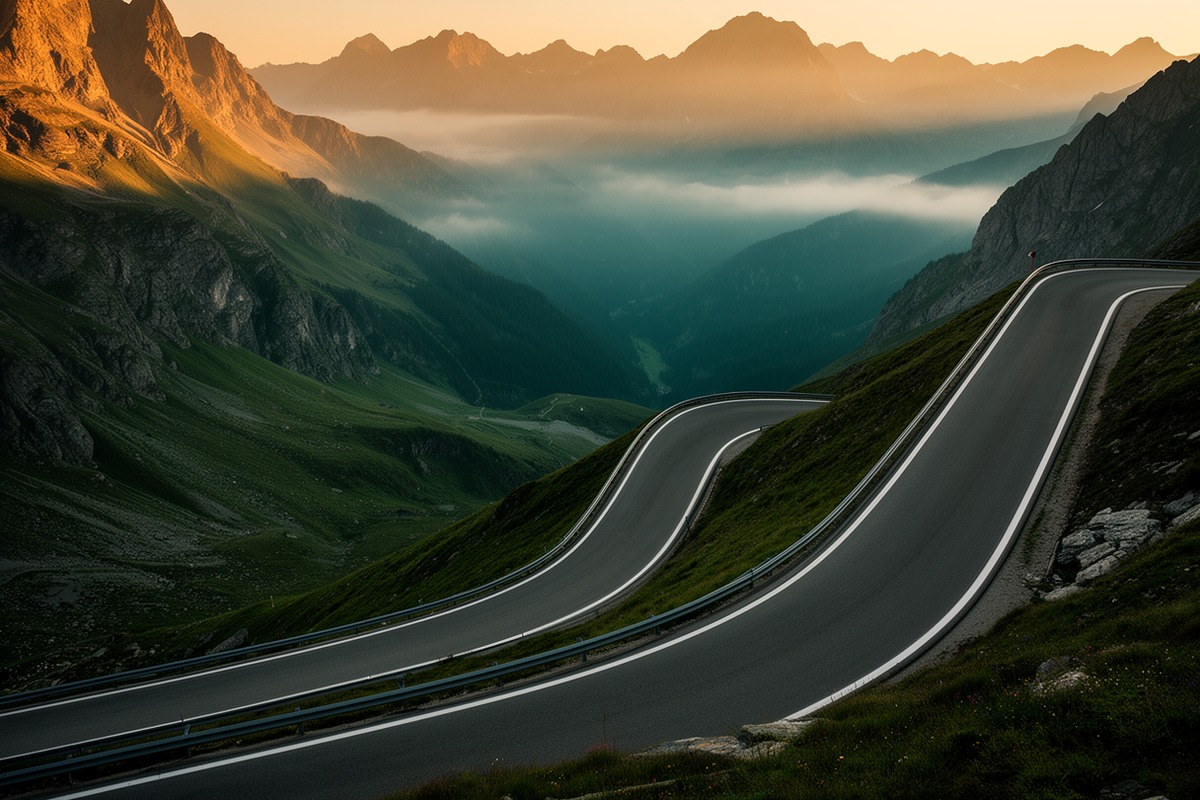
The Tour has reached the end of its second week, and its hardest question is still waiting. Stages 19 and 20, on July 24 and 25, both finish on Alpe d’Huez — the first time the race has faced those twenty-one hairpins on consecutive days. The route has saved its sharpest Alpine test for the final week: one mountain, twice, inside 24 hours.
Here’s what is worth watching as the race heads toward that weekend.
The race: a mountain used as a closing argument
Alpe d’Huez is the most photographed climb in cycling and, lately, not the most decisive — plenty of recent Tours were settled on lesser-known walls before the race ever reached it. Putting two Alpe finishes back to back changes that. The first ascent thins the field; the second asks whoever’s left to do it again on legs that already know exactly how much it hurt.
The general classification gives the setup real tension. Tadej Pogačar reached this point in yellow and strengthened his advantage with the Stage 14 win; Jonas Vingegaard remains his closest established challenger, with Remco Evenepoel also in the broader podium fight. That makes the final Alpine block less about a speculative early attack and more about whether anyone can turn two summit finishes into enough time to change the race.
The broader design choice is the interesting part. This Tour opened with a team time trial — the first since 1971 — and carries only about 26 kilometers of individual time trial across three weeks. That’s almost nothing. A route that refuses to let the strongest time trialist ride away from everyone else is, by construction, a route that hands the race to the best climber on the worst day. Two days on Alpe d’Huez is where “best climber on the worst day” gets measured.
Training idea: climb the way the race does, not the way your ego does
The lesson to steal from a double-Alpe weekend isn’t about watts. It’s about the day after.
Most amateurs plan a big climbing ride and treat it as a single event. The pros are being asked to climb hard, recover overnight, and climb hard again — and the riders who handle that best are usually the ones who left something in reserve on day one, even when they didn’t have to. If you’re building toward a multi-day trip or a back-to-back weekend of hilly rides, the useful discipline is pacing the first day as if the second day is the one that counts. It almost always is.
A head unit that actually detects the climb ahead helps here more than raw power numbers do. Knowing a gradient is about to kick to 10% for the next three kilometers is the difference between pacing a climb and surviving it.
Café note: the ritual is the point
There’s a version of Tour-watching that is pure spreadsheet — gaps, gradients, power estimates. And there’s the version that happens at the café: someone brings up last night’s stage, someone else defends a rider who cracked, and the coffee goes cold because the argument is better than the pastry.
Both are correct. But the second one is why the sport keeps people for decades rather than seasons. The climbs are the headline; the coffee afterward, or the espresso pulled before the alarm-clock start to catch a live mountain stage, is the part that actually becomes a habit. Every serious climb, amateur or professional, starts hours earlier at a machine somewhere.
Cycling Notes goes out weekly through the season. Have a stage pick, route, or gear question worth including next week? You know where to find us.