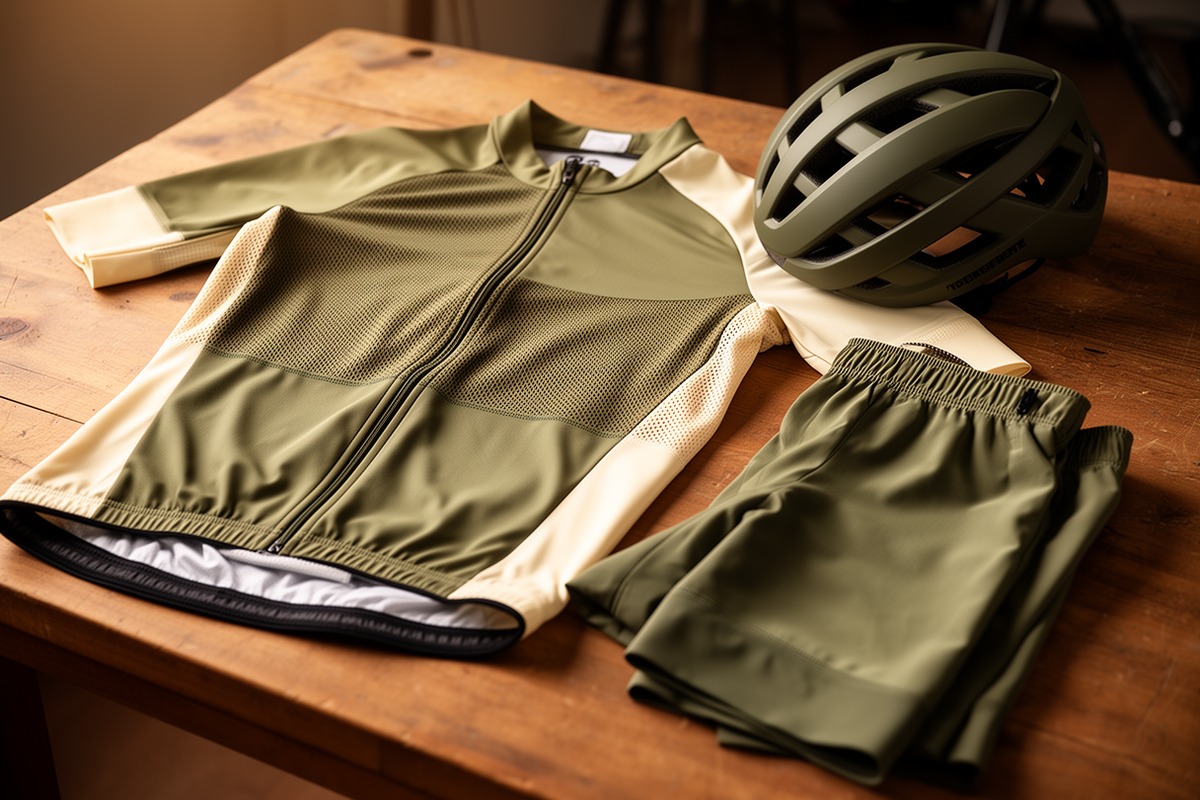
Every jersey tag says “technical fabric.” Almost none of them say what the fabric is technical at. Here’s the honest version, material by material.
Merino wool: the slow-twitch fiber
Merino regulates temperature in both directions, doesn’t smell after two days of wear, and feels like something you’d choose to wear off the bike. Its trade-offs: it holds more water than synthetics, dries slower, and costs more per gram than some bike parts. Best for: commutes, gravel days, cool-weather base layers, and anyone who has ever sniffed a polyester jersey after a fast climb.
Polyester: the sprinter
Nearly every race jersey is polyester because it does three things brilliantly: wicks sweat outward, weighs nothing, and dries before the descent ends. It also holds odor like a grudge, which is why the good stuff gets an anti-microbial treatment. Best for: hot days, hard efforts, anything you’ll wash after every ride.
Nylon: the domestique
You’ll rarely see a jersey that’s mostly nylon, but you’ll almost never see bib shorts without it. Nylon brings abrasion resistance and that dense, supportive stretch when it’s woven with elastane. It’s the material doing quiet work while polyester takes the podium interviews.
The blend is the actual product
A “merino” jersey at 60/40 merino-polyester isn’t a compromise — it’s usually the point: wool’s comfort and odor control with synthetic drying speed. Read the percentage, not the headline fiber. A fabric is a team, and the ratios are the team tactics.
What to actually check before buying
- Weight (gsm) — under 150 for summer, 200+ for shoulder seasons.
- Blend ratio — the second fiber tells you what problem the first one has.
- Flatlock seams — the difference between a long ride and a long lesson in friction.
- Zipper quality — the first thing to fail on a cheap jersey, always.
Materials aren’t marketing. They’re the difference between finishing a ride thinking about the ride, or thinking about your jersey.